
Procrastination and Self-Sabotage: Why You Avoid What Matters Most

Procrastination and Self-Sabotage: Why You Avoid What Matters Most

What happened when I procrastinated on a conversation about procrastination.

Sometimes, you just have to laugh at yourself. Last Friday was one of those days for me.

I had scheduled the whole day to practise for a retreat that I was facilitating on Saturday. As a person with strong Avoider and Restless saboteurs, I was prepared for lots of attempts by my saboteurs to undermine the plan.

One approach I find very helpful is to breakdown a big piece of work into short tasks. My saboteurs are less likely to be triggered by many short tasks than one big task. So, I planned my work in chunks of time—nothing longer than 30 minutes—with breaks in between.

I also made sure to have a long PQ session early in the morning to stimulate the sage part of my brain where creativity and focus live.

All good, I thought.

Around 2:00 pm, I was making some notes on a mastermind conversation about procrastination that had just ended when it hit me; I had just used a conversation about procrastination to procrastinate!

Holy moly, those saboteurs are sneaky!

In the end, it all turned out fine. I had anticipated that my saboteurs would try to undermine what I wanted and, by imagining how my particular saboteurs might behave, I had been able to organize my day to counter the most likely ways they would interfere.

And, most importantly, when I realized that I was procrastinating, I didn’t judge. I celebrated myself for catching my saboteurs, lovingly reminded them and me that the saboteurs’ original intent was to keep me safe during a sometimes difficult childhood, and then went back to my original plan for the day.

I call that a win and more reason to celebrate!

Procrastination isn’t a character flaw

Our understanding about procrastination has evolved a lot in the last few years. Procrastination used to be seen as evidence of a lack of willpower, of a character flaw. The act of procrastination was bad and worse, you were a weak person for having procrastinated. Cue the shame and guilt most of us felt when procrastination led to problems.

More recent research turns that idea on its head. In a widely cited 2013 study, psychologists Fuschia Sirois and Tim Pychyl found that procrastination functions primarily as short-term mood regulation, not a failure of willpower: we delay tasks to escape the uncomfortable feelings those tasks stir up, even knowing the delay will cost us later.

Procrastination, this perspective says, is a solution to a problem; a problem that you don’t want to experience. Let’s say you know you have a challenging report to write and it’s due in two weeks. By ignoring the upcoming deadline, you can also ignore any underlying feelings that are connected to writing the report. Feelings, like inadequacy because you are worried you aren’t smart enough or fear that you will make a critical mistake, are the actual problem you avoided while you ostensibly avoid the report. Procrastination is a way of numbing or delaying uncomfortable feelings, but long-term, it’s not a great strategy.

This is where procrastination and self-sabotage overlap. Both are protective strategies your brain reaches for to avoid discomfort, not evidence that something is wrong with you.

The real cost of procrastination

In his new book, Procrastination Proof: Never Get Stuck Again, Jon Acuff says that the real cost of procrastination is that we put off those projects that both scare us and fulfill us. Learning the skill, writing the book, or accepting the new role; all get postponed indefinitely to our detriment.

He offers a better option: give yourself permission to dream, plan, do, and review.

As adults, we need to see how we deny ourselves permission to live the way we want. By framing procrastination as withholding permission, we also deny ourselves the opportunity to be creative, resourceful and productive. Giving ourselves permission to dream about what we want, followed by space to plan and take action on that dream helps to break the habit of procrastination. Building in a pause to review results, whether one day, one month or one year in, safeguards against too much discomfort.

Ultimately, desire to achieve the dream you’ve imagined provides the motivation you need to bypass procrastination.

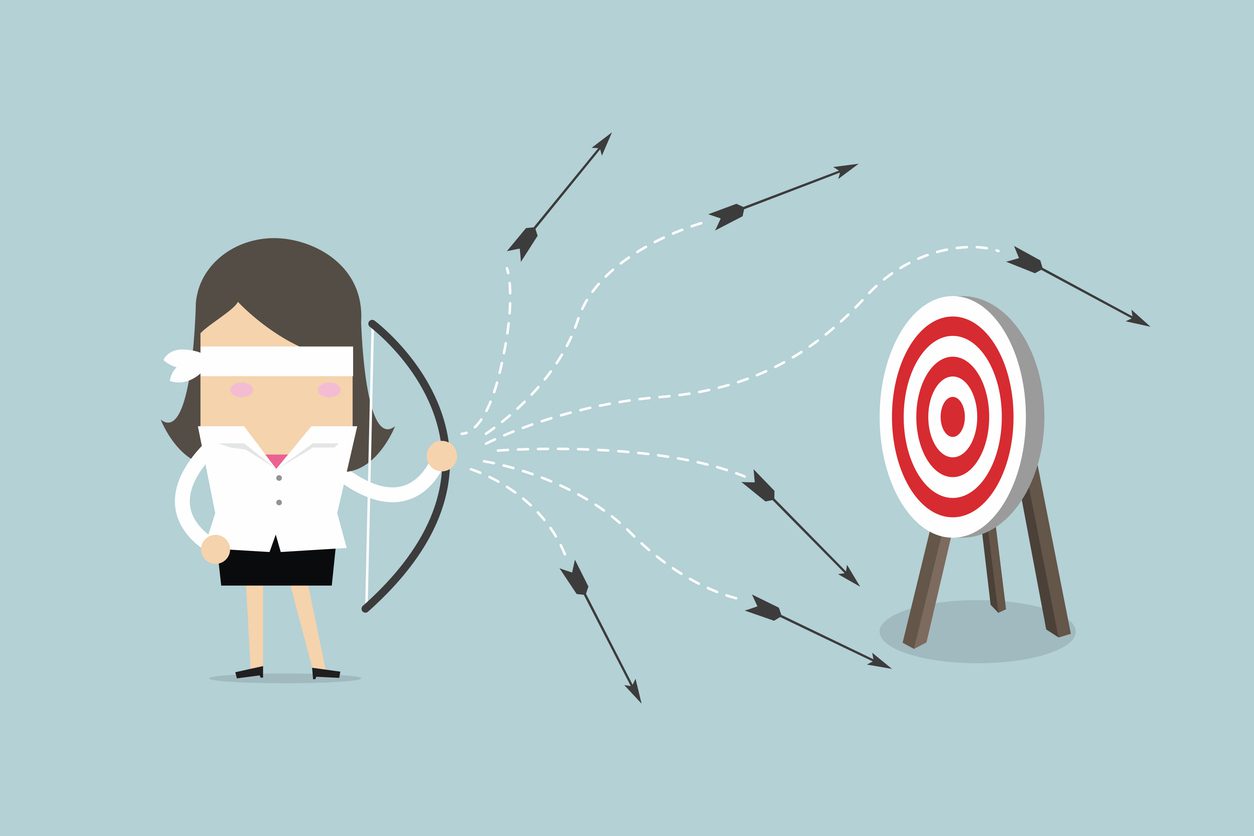
It’s Not You: It’s the system that is making you exhausted

It’s Not You: It’s the system that is making you exhausted

Nonprofit leaders burn out because the sector is chronically under-resourced — not because they lack resilience, discipline, or better boundaries. Here’s how to stop internalizing a structural problem, and what to do about the part that is actually yours.

Let’s say your job is to fill a swimming pool with a garden hose, on a deadline, while simultaneously coaching the swim team, meeting board of health requirements, and submitting reports that demonstrate the value of the pool to the community.

This could be a metaphor for one bad week. For many of us, that’s just a regular Tuesday.

And, it’s just half the story.

When nonprofit leaders come for coaching because they are burnt out, overwhelmed, and stuck in patterns of self-sabotage, the first thing I do is help them look inward. We examine the inner critics — the Pleaser who can’t say no, the Hyper-Achiever who can’t stop, the Controller who can’t delegate. We build mental fitness habits. We work on boundaries. And it helps. Usually a lot.

And, at some point, my clients come to understand that much of what they’re experiencing isn’t a personal failing. It’s the predictable result of a sector that is chronically under resourced.

Why are nonprofit leaders so exhausted?

The nonprofit sector in Canada is built on structural contradictions: we are expected to deliver complex, high-quality services on budgets that never cover the true cost of the work. Funders routinely shy away from including costs they deem “overhead.” Salaries lag behind comparable roles in the public and private sectors. Pensions, health benefits, and in-service training? Unicorns.

Filling the pool is impossible because the hose is too narrow, the water pressure too weak, and the deadline too tight.

But the system knows that our passion for the work will fill the gaps that dollars won’t.

And leaders? They try to deal with it all. You try to deal with it all.

What systemic under resourcing does to leaders

I’ve been a nonprofit leader for years. Now working with leaders as a coach and consultant, I see the same patterns repeatedly. You are managing workloads that should be shared across two or three people. You are leading, managing, communicating, and advocating — often without adequate support, and sometimes without a living wage for your staff.

Over time, this creates what researchers call chronic stress — not the acute stress of a difficult week, but the grinding, relentless stress of never having enough. Chronic stress depletes dopamine, disrupts sleep, impairs decision-making, and — you guessed it — your inner saboteurs thrive.

The Hyper-Achiever Saboteur thrives in environments of scarcity. It tells you to do more, be more, prove more — because clearly the problem is that you’re not working hard enough. The Pleaser Saboteur tells you to absorb unreasonable demands rather than speak up and disappoint anyone. The Stickler Saboteur convinces you that perfectionism will hold the entire operation together.

These aren’t character flaws. They’re adaptive responses to work that keeps asking for more than it gives back.

We need to look upstream

Desmond Tutu popularized the concept of upstream thinking: rather than only saving the people who fall in the river, we ask why they are falling in to start with. We look upstream at the conditions— perhaps too few bridges or slippery riverbanks — that are making people fall in and address them.

We need the same lens for nonprofit leadership.

Yes, we need to help individual leaders recover from burnout and interrupt self-sabotaging patterns. That work is urgent and important. But we also need to be frank about the conditions in our sector and how they are impacting us and our teams.

Asking a leader or a member of her team to be more resilient without addressing the conditions that erode their resilience is like handing someone a better bucket and asking them to bail more efficiently.

What we can do right now

I won’t pretend that any one of us can singlehandedly fix sector-wide conditions. You can’t, and I can’t.

What we can do is to stop internalizing the structural failures of the system. Intercept and reject self-sabotage that says if you were just a little more organised, a little more efficient, worked a few more weekends, everything would be fine.

You can learn to recognise when your stress is a reasonable response to unreasonable conditions and respond with self-compassion rather than self-criticism.

You can build the mental fitness to make clear-headed decisions even under pressure: when to push for more resources, when to say no to another “priority,” when to have the courageous conversation with your board about what sustainable leadership actually requires.

You can protect your own capacity so that you can be part of the longer, harder work of looking upstream to change the conditions.

Burned-out leaders can’t advocate for healthier workplaces. Leaders who are running on empty can’t create sustainable, well-resourced organisations.

An invitation

The next cohort of the Calm Confident Nonprofit Leader program begins May 1st. Over seven weeks, we’ll work on both fronts: building your mental fitness to intercept self-sabotage and strengthening your capacity to lead with clarity in a sector that doesn’t always make it easy.

This program is for nonprofit leaders who are tired of white-knuckling their way through and are ready to lead with more calm, more self-assurance, and a lot less self-criticism.

If that sounds like you, I’d love to connect. DM me to explore whether this program is the right fit.

What you can’t see is running your life

What you can’t see is running your life

I think about my car like I think about my can opener—as a tool. So, when it was time for a new car, I bought the sturdiest, most reliable one I could afford. It’s a gray Toyota; one of a million. The antithesis of flashy. It does the job.

I like it just fine except for its wide windshield pillars. They’re a feature of the design–sturdy and safe–but they create a blind spot that is especially dangerous when I’m making a right turn. If I’m not careful and deliberate about leaning forward, checking and doublechecking, I can easily miss what’s right there next to me.

We humans have blind spots too.

A blind spot is something about ourselves that we cannot see. It can be a habit, a reaction, or a way of thinking that may be clearly visible to everyone around us. And just like those pillars on my car, our blind spots aren’t random. They’re often built right into our strengths. The very structures that kept us safe can block our view.

How our strengths become our blind spots

Our saboteurs, those inner critical voices that developed early in life to keep us safe, act like windshield pillars. They create an obstruction.

The Judge, for example, makes us intensely focused on what’s wrong: with ourselves, with others, with circumstances. We believe we are being perceptive. Others can experience us as relentlessly critical.

The Pleaser saboteur has us believe we are being generous and caring; we try to ensure everyone is happy. Others may feel they can never get a straight answer. The Stickler saboteur is certain their high standards are helping the team. Colleagues feel micromanaged.

This is how our saboteurs create our blind spots: we experience our saboteurs as virtues. We don’t know we need to lean forward and check our view.

Three ways to get a better view

Ever notice an unexpectedly strong reaction? Defensiveness, shame, or anger are often signals that a saboteur is blocking your view of what’s really happening. Take a few deep breaths or a walk around the block, then ask yourself what thought emerged to cause that reaction? Then do a gut check. Does that thought feel true or is it a story that a saboteur is telling you?

Try inviting honest feedback from someone you trust: “What’s one thing I do that might be getting in my own way?” Listen without defending, explaining or debating. Then, consider what you have heard. Does it resound somewhere in your body? Do you recognize it as true?

Look for repeating patterns. If the same frustrating dynamic keeps showing up with different people, that could be a blind spot signalling you. The common thread in all those situations is you — and that’s good news, because it means you have the power to change course.

If you recognise yourself in any of this — the reactions that seem bigger than the moment warrants, the feedback you’ve heard more than once, the pattern that keeps showing up — that could be a blind spot you may want to work on.

My coaching clients learn to identify their saboteur-driven blind spots, understand how they shape behaviour, and take steps towards the future they envision for themselves. If you’re curious about what your blind spot is obscuring, I’d love to have a conversation.

A Leader’s Guide to Recognizing the Stages of Burnout

A Leader’s Guide to Recognizing the Stages of Burnout

You’ve been the most passionate person in the room for years. You’ve championed every campaign, mentored every new hire, and answered emails at midnight because you believe in the work. Lately, you’re dreading Mondays. The big deadline is three weeks away, and you can’t bring yourself to care whether you meet it or not. You’re going through the motions and telling yourself that you’re just tired. But you’re wondering, secretly, if something is wrong with you.

Something is wrong!

And, it might be burnout.

Contrary to common belief, burnout is not a sudden dramatic collapse. It is a gradual draining of energy, and by the time most people recognize it, they are already well into the trajectory.

What burnout is (and is not)

In 2019, the World Health Organization formally recognized burnout and defined it as a syndrome resulting from chronic workplace stress that has not been successfully managed. It is not classified as a medical condition and, unhelpfully in my view, focuses on workplace causes only.

The leading researchers in this field, Christina Maslach and Michael Leiter, identify three hallmarks:

  • exhaustion (the depletion of physical and emotional resources), 
  • cynicism (a growing detachment or negativity toward one’s work), and 
  • inefficiency (reduced professional efficacy and productivity).1

These three dimensions tend to compound each other, which is why burnout, once established, can be difficult to recover from without help.

Burnout is also not the same as stress. Stress, colloquially, is the experience of too much. For example, too many demands and too little time. Burnout is the experience of not enough; too little energy, meaning, connection, and agency over time. You can feel stress and still be happy and engaged. Burnout is what happens when too many stressors deplete your energies for too long.

The nonprofit sector: A high-risk environment

The numbers for our sector are worrying. According to a 2024 report from YMCA WorkWell and Charity Insights Canada, 58% of nonprofit staff report experiencing burnout, with the figure rising to 71% among leaders. A separate analysis from the Charity Insights Canada Project found that burnout and workload pressure as drivers of staff turnover rose from approximately 28% of organizations in 2023 to 35% in 2024.

These figures indicate a burnout crisis in our sector.

The three stages of burnout

Broadly described, burnout is a progressive process with identifiable stages. Understanding these stages, and where you or someone on your team might be, are the first steps to effective intervention.

Stage 1: Onset of burnout

Work is no longer consistently enjoyable. Some days are fine; others are draining. There are moments when we feel irritable, have difficulty concentrating, or a vague sense of dread before certain meetings or tasks. Sleep may become less restorative. At this stage, most people assume they just need a good weekend or a short holiday and sometimes that helps, temporarily.

Stage 2: Adaptation to burnout

Difficult days now outnumber good ones. Procrastination increases; and our enthusiasm for previously meaningful work is muted. Physical symptoms like persistent fatigue, headaches, and more frequent illness appear. Cynicism begins to creep in. Tasks and responsibilities we used to enjoy or find easy, are now much more difficult.

Stage 3: Burnout

The three hallmarks of burnout are now evident: significant exhaustion, consistent cynicism or detachment, and loss of efficacy. Work feels futile and you may feel emotionally absent. At this stage, people often begin to seriously consider leaving the sector entirely.

When you reach burnout, you experience significant mental and physical health conditions. Recovery at this stage typically requires medical intervention and other sustained supports for recovery.

Signs to watch for

One of the challenges of burnout is that the people most affected are often the last to recognize it. And, if they do, they are reluctant to say, “I think I’m burned out.” High performers in particular are apt to ignore signals and reframe depletion as mere tiredness. As a leader, there are signs worth watching for in yourself and others:

  • a previously engaged person becomes noticeably less present or communicative
  • someone who was once reliable begins missing deadlines or making uncharacteristic errors
  • cynicism, sarcasm, or pessimism appears in someone who was previously constructive
  • physical complaints (fatigue, headaches, frequent illness) become a recurring theme
  • a person begins distancing themselves from the organization’s mission or outcomes

None of these signals, on their own, confirms burnout, but a cluster that persists warrants your attention.

Where to start

Dr. Neha Sangwan, physician and burnout researcher, whose book Powered By Me informs this series, offers a powerful but simple starting point: check in with your body. Before your mind has caught up, your body has often already begun to register the onset of burnout. Persistent tension, creeping heaviness of certain tasks, constant fogginess in your thinking or disrupted sleep are typical symptoms of burnout. If your symptoms are significant, please see your doctor.

Reflection: Where are you on the continuum?

Take a moment to consider which stage of the burnout continuum you may be experiencing. What useful information about burnout do you now have that you didn’t have before?

  1. Maslach, C., & Leiter, M. P. (2016). Understanding the burnout experience: recent research and its implications for psychiatry. World Psychiatry, 15(2), 103–111.
Why you’re so drained (it’s not what you think)

Why you’re so drained (it’s not what you think)

You know that bone-tired exhaustion that no amount of sleep seems to fix?

Yes, its your workload.

AND it’s about the inner self-sabotage running in the back of your mind and draining your energy all day long.

And a good part of the night too.

Why you’re so drained

Let me show you how self-sabotage works:

=> The Pleaser wants to say yes to every request, even when you’re already overwhelmed. You end the day resentful and depleted because you gave everyone else what they needed, except yourself.

=> The Hyper-Achiever convinces you that you’re only valuable when you’re producing. So you push through exhaustion, ignore your body’s signals, and wonder why you feel burnt out even after accomplishing so much.

=> The Controller won’t let you delegate because “no one will do it right.” So you micromanage everything, staying late to redo work, never trusting your team. The mental load is crushing.

=> The Restless keeps you jumping from task to task, never satisfied with what you’ve done, always focused on what’s next. You can’t enjoy any accomplishment because you’re already anxious about the next thing.

=> The Victim makes you feel like everything is happening TO you. The board, the funders, the staff; everyone is making your life harder. This point-of-view is exhausting.

See how your workload grows and grows while self-sabotage becomes a habit that drains you?

And those messages run day and night unless you learn to intercept them.

That’s exactly what we do in the Calm Confident Nonprofit Leader program.

You can be a calm confident nonprofit leader

In 7 weeks, you’ll learn to:

  • Identify which saboteurs are most active in YOUR life
  • Recognize them as they occur and before they drain you
  • Intercept their messages and choose different positive responses
  • Build the mental fitness to sustain your energy and achieve your goals

Participants tell me that the Calm Confident Nonprofit Leader program interrupts their negative self-talk that gets in the way of their personal happiness and success.

One said that program, “has profoundly altered the way I manage my stress, my challenges and personal view on the world at large.”

Small pods of 5 leaders mean personalized attention, but also limited spots.

Registration closes February 27. That’s just days away. We start March 2.

[maxbutton id=”9″ ]

Imagine ending your workday with energy left. Not just once in a while—consistently.

That’s what happens when you stop letting saboteurs drain you.

Is it selfish to invest in yourself right now?

Is it selfish to invest in yourself right now?

A woman I spoke with recently said something heartbreaking:

“Lucy, this sounds like exactly what I need, but it feels selfish to spend money on myself when my organization needs so much.”

I understand this feeling deeply. As nonprofit leaders, we’re wired to put our missions first, our teams second, and ourselves… somewhere down the list.

As women? The list can look the same: family first, friends second, community next, and so on.

Is your cup empty?

You know intellectually you can’t pour from an empty cup. But the combination of external pressures and internal voices to keep putting everyone else first can drown out what you know.

Just consider what that stress is already costing you:

  • Muddled decision-making that affects your entire organization
  • Strained relationships with your board, your team, your family
  • Health issues that will only get worse without intervention
  • Missed opportunities because you’re too overwhelmed to see them
  • That constant feeling that you’re not bringing your best self to work that matters

And here’s what it’s costing your organization:

  • A leader who’s running on fumes 
  • Decisions made from stress instead of clarity
  • A culture that mirrors your burnout
  • The very real possibility that you’ll leave the sector entirely

The least selfish thing you can do for your mission is to show up as the calm, confident, clear-headed leader your organization deserves.

When you invest in yourself, everyone benefits.

Sustainable leadership

Imagine walking into work energized, knowing you’ll tackle challenges with clarity—not confusion. Imagine ending your day on time, guilt-free, with energy left for the people you love.

This is sustainable leadership, not selfishness.

The Calm Confident Nonprofit Leader program gives you the framework, tools, and support to make this shift in just 7 weeks.

You deserve to feel:

  • Self-confidence so you don’t constantly second-guess yourself
  • Equanimity in the face of multiple pressures
  • Balance so you can enjoy your work and your home life
  • Courage to step into your authority and wisdom
  • Joy to keep your passion for your mission alive

These are the results of effective executive coaching for women nonprofit leaders who know that sustaining their organizations means sustaining their leadership.

You’re not just investing in yourself—you’re investing in your organization’s future.

[maxbutton id=”9″ ]

Registration closes February 27. We start March 2.

P.S. If you’re still wrestling with this question, connect with me and let’s talk about it.