Procrastination and Self-Sabotage: Why You Avoid What Matters Most

Procrastination and Self-Sabotage: Why You Avoid What Matters Most

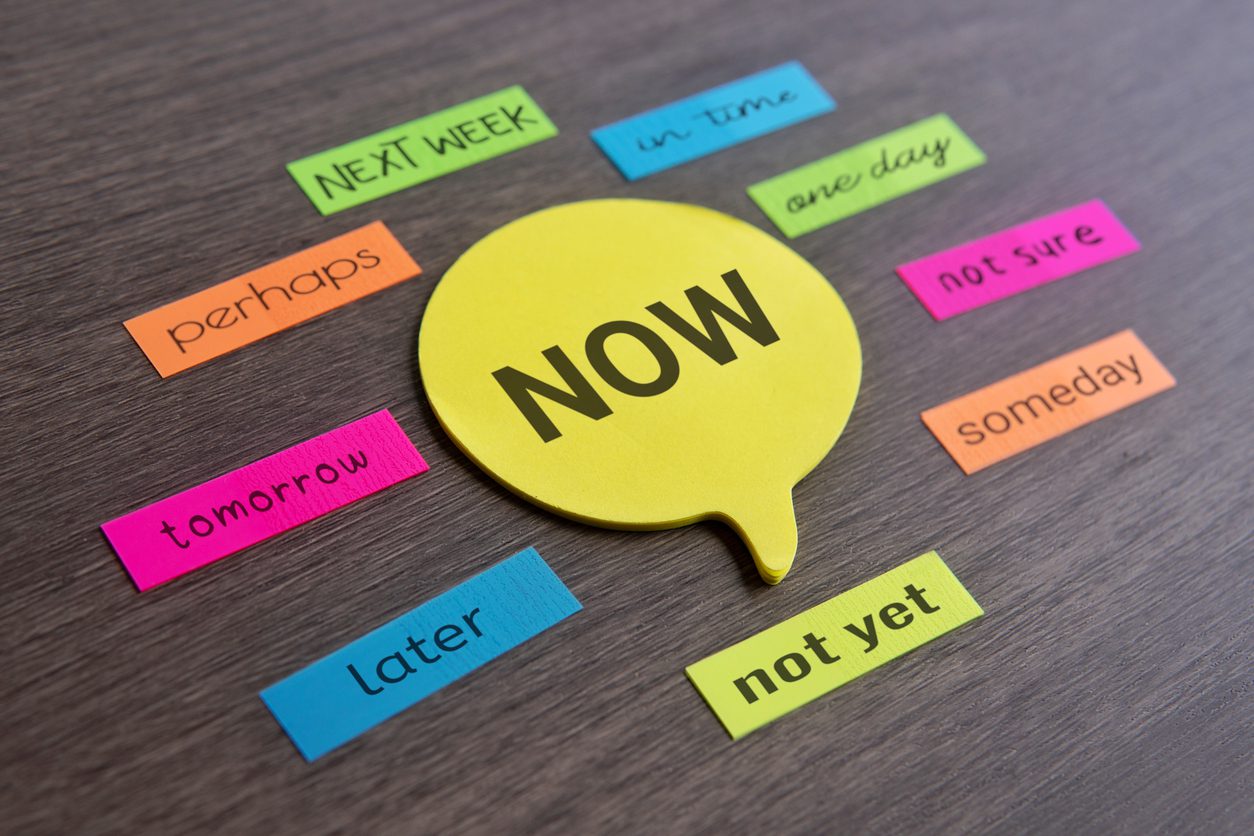
What happened when I procrastinated on a conversation about procrastination.

Sometimes, you just have to laugh at yourself. Last Friday was one of those days for me.

I had scheduled the whole day to practise for a retreat that I was facilitating on Saturday. As a person with strong Avoider and Restless saboteurs, I was prepared for lots of attempts by my saboteurs to undermine the plan.

One approach I find very helpful is to breakdown a big piece of work into short tasks. My saboteurs are less likely to be triggered by many short tasks than one big task. So, I planned my work in chunks of time—nothing longer than 30 minutes—with breaks in between.

I also made sure to have a long PQ session early in the morning to stimulate the sage part of my brain where creativity and focus live.

All good, I thought.

Around 2:00 pm, I was making some notes on a mastermind conversation about procrastination that had just ended when it hit me; I had just used a conversation about procrastination to procrastinate!

Holy moly, those saboteurs are sneaky!

In the end, it all turned out fine. I had anticipated that my saboteurs would try to undermine what I wanted and, by imagining how my particular saboteurs might behave, I had been able to organize my day to counter the most likely ways they would interfere.

And, most importantly, when I realized that I was procrastinating, I didn’t judge. I celebrated myself for catching my saboteurs, lovingly reminded them and me that the saboteurs’ original intent was to keep me safe during a sometimes difficult childhood, and then went back to my original plan for the day.

I call that a win and more reason to celebrate!

Procrastination isn’t a character flaw

Our understanding about procrastination has evolved a lot in the last few years. Procrastination used to be seen as evidence of a lack of willpower, of a character flaw. The act of procrastination was bad and worse, you were a weak person for having procrastinated. Cue the shame and guilt most of us felt when procrastination led to problems.

More recent research turns that idea on its head. In a widely cited 2013 study, psychologists Fuschia Sirois and Tim Pychyl found that procrastination functions primarily as short-term mood regulation, not a failure of willpower: we delay tasks to escape the uncomfortable feelings those tasks stir up, even knowing the delay will cost us later.

Procrastination, this perspective says, is a solution to a problem; a problem that you don’t want to experience. Let’s say you know you have a challenging report to write and it’s due in two weeks. By ignoring the upcoming deadline, you can also ignore any underlying feelings that are connected to writing the report. Feelings, like inadequacy because you are worried you aren’t smart enough or fear that you will make a critical mistake, are the actual problem you avoided while you ostensibly avoid the report. Procrastination is a way of numbing or delaying uncomfortable feelings, but long-term, it’s not a great strategy.

This is where procrastination and self-sabotage overlap. Both are protective strategies your brain reaches for to avoid discomfort, not evidence that something is wrong with you.

The real cost of procrastination

In his new book, Procrastination Proof: Never Get Stuck Again, Jon Acuff says that the real cost of procrastination is that we put off those projects that both scare us and fulfill us. Learning the skill, writing the book, or accepting the new role; all get postponed indefinitely to our detriment.

He offers a better option: give yourself permission to dream, plan, do, and review.

As adults, we need to see how we deny ourselves permission to live the way we want. By framing procrastination as withholding permission, we also deny ourselves the opportunity to be creative, resourceful and productive. Giving ourselves permission to dream about what we want, followed by space to plan and take action on that dream helps to break the habit of procrastination. Building in a pause to review results, whether one day, one month or one year in, safeguards against too much discomfort.

Ultimately, desire to achieve the dream you’ve imagined provides the motivation you need to bypass procrastination.


A Leader’s Guide to Recognizing the Stages of Burnout

A Leader’s Guide to Recognizing the Stages of Burnout

You’ve been the most passionate person in the room for years. You’ve championed every campaign, mentored every new hire, and answered emails at midnight because you believe in the work. Lately, you’re dreading Mondays. The big deadline is three weeks away, and you can’t bring yourself to care whether you meet it or not. You’re going through the motions and telling yourself that you’re just tired. But you’re wondering, secretly, if something is wrong with you.

Something is wrong!

And, it might be burnout.

Contrary to common belief, burnout is not a sudden dramatic collapse. It is a gradual draining of energy, and by the time most people recognize it, they are already well into the trajectory.

What burnout is (and is not)

In 2019, the World Health Organization formally recognized burnout and defined it as a syndrome resulting from chronic workplace stress that has not been successfully managed. It is not classified as a medical condition and, unhelpfully in my view, focuses on workplace causes only.

The leading researchers in this field, Christina Maslach and Michael Leiter, identify three hallmarks:

  • exhaustion (the depletion of physical and emotional resources), 
  • cynicism (a growing detachment or negativity toward one’s work), and 
  • inefficiency (reduced professional efficacy and productivity).1

These three dimensions tend to compound each other, which is why burnout, once established, can be difficult to recover from without help.

Burnout is also not the same as stress. Stress, colloquially, is the experience of too much. For example, too many demands and too little time. Burnout is the experience of not enough; too little energy, meaning, connection, and agency over time. You can feel stress and still be happy and engaged. Burnout is what happens when too many stressors deplete your energies for too long.

The nonprofit sector: A high-risk environment

The numbers for our sector are worrying. According to a 2024 report from YMCA WorkWell and Charity Insights Canada, 58% of nonprofit staff report experiencing burnout, with the figure rising to 71% among leaders. A separate analysis from the Charity Insights Canada Project found that burnout and workload pressure as drivers of staff turnover rose from approximately 28% of organizations in 2023 to 35% in 2024.

These figures indicate a burnout crisis in our sector.

The three stages of burnout

Broadly described, burnout is a progressive process with identifiable stages. Understanding these stages, and where you or someone on your team might be, are the first steps to effective intervention.

Stage 1: Onset of burnout

Work is no longer consistently enjoyable. Some days are fine; others are draining. There are moments when we feel irritable, have difficulty concentrating, or a vague sense of dread before certain meetings or tasks. Sleep may become less restorative. At this stage, most people assume they just need a good weekend or a short holiday and sometimes that helps, temporarily.

Stage 2: Adaptation to burnout

Difficult days now outnumber good ones. Procrastination increases; and our enthusiasm for previously meaningful work is muted. Physical symptoms like persistent fatigue, headaches, and more frequent illness appear. Cynicism begins to creep in. Tasks and responsibilities we used to enjoy or find easy, are now much more difficult.

Stage 3: Burnout

The three hallmarks of burnout are now evident: significant exhaustion, consistent cynicism or detachment, and loss of efficacy. Work feels futile and you may feel emotionally absent. At this stage, people often begin to seriously consider leaving the sector entirely.

When you reach burnout, you experience significant mental and physical health conditions. Recovery at this stage typically requires medical intervention and other sustained supports for recovery.

Signs to watch for

One of the challenges of burnout is that the people most affected are often the last to recognize it. And, if they do, they are reluctant to say, “I think I’m burned out.” High performers in particular are apt to ignore signals and reframe depletion as mere tiredness. As a leader, there are signs worth watching for in yourself and others:

  • a previously engaged person becomes noticeably less present or communicative
  • someone who was once reliable begins missing deadlines or making uncharacteristic errors
  • cynicism, sarcasm, or pessimism appears in someone who was previously constructive
  • physical complaints (fatigue, headaches, frequent illness) become a recurring theme
  • a person begins distancing themselves from the organization’s mission or outcomes

None of these signals, on their own, confirms burnout, but a cluster that persists warrants your attention.

Where to start

Dr. Neha Sangwan, physician and burnout researcher, whose book Powered By Me informs this series, offers a powerful but simple starting point: check in with your body. Before your mind has caught up, your body has often already begun to register the onset of burnout. Persistent tension, creeping heaviness of certain tasks, constant fogginess in your thinking or disrupted sleep are typical symptoms of burnout. If your symptoms are significant, please see your doctor.

Reflection: Where are you on the continuum?

Take a moment to consider which stage of the burnout continuum you may be experiencing. What useful information about burnout do you now have that you didn’t have before?

  1. Maslach, C., & Leiter, M. P. (2016). Understanding the burnout experience: recent research and its implications for psychiatry. World Psychiatry, 15(2), 103–111.
Three Reasons Your Personal Boundaries Don’t Work (And How to Fix Them)

Three Reasons Your Personal Boundaries Don’t Work (And How to Fix Them)

“Thank you for thinking of me but I’m not available at this time.”

This is all I wrote when I declined to write a graduate school reference letter for a former colleague I had worked with briefly.

I had been brooding over my reply for a couple of weeks. I was surprised by how resentful I felt about this request. When the first email was followed by a second and then a text, I felt pushed. The text felt aggressive.

At the same time, I felt petty to be wanting to protect my time and boxed in by the request, feeling that I was holding this person’s future in my hands and therefore was obligated to agree.

What to do?

The Uncomfortable Truth About Boundaries

Life coach Nancy Levin says, a boundary is an agreement between you and yourself about what you will or will not do, accept or tolerate. A boundary is how you uphold a value or principle in your life. It is not about controlling other people and their behaviour. When you experience resentment, guilt, and other negative feelings, those feelings are signals that you are disrespecting your own boundaries.

Take a minute and let that sink in.

In my case, someone asked me to do them a favour and I felt resentful to have been asked even though I had total freedom to say no. So why did I have big negative feelings?

Digging deeper, I realized that I didn’t believe I had the right to protect my time, I didn’t have a “good reason” to decline, and more painfully, I didn’t feel I had the right to say no to a request with absolutely nothing in it for me.

Aha! My saboteurs wanted me to ignore my boundaries so they were sending me the message that I was not entitled to value myself that highly.

I felt selfish saying no but I did it anyway because what I really wanted, more than earning goodwill for writing the letter, was time to myself.

Three Common Boundary Mistakes You Are Probably Making

  1. Boundaries are not about other people; they’re about you. You may want cousin Babs to stop making sexist jokes but your boundary is not a rule for them. It’s a rule for you. A clear statement about your boundary could be: “Babs, I don’t appreciate sexist jokes, so I’m going to leave if you continue.”
  2. Resentment and guilt are signals that you, not others, are disrespecting your boundaries. When someone else’s behaviour triggers those feelings ask yourself what boundary is being challenged and why you feel you can’t say no. Saboteur-driven wants could be needing to: be liked or to earn affection, be a hero, avoid criticism or blame, or control another person’s experience. Protect your boundaries and say no to requests or circumstances that are out of alignment with what you truly want.
  3. Boundaries are not walls, they are gates. Levin uses the metaphor of healthy, well-maintained personal boundaries as gateways to freedom. When you guard your values and principles, and focus on what you most desire, boundaries support you and your goals by creating space, preserving your energy, and maintaining your emotional safety.

Saying No Without Guilt

I’d like to tell you that saying no to writing the letter caused my feeling of selfishness to vanish. The reality is that I need more practice at setting healthy boundaries, recognizing and correcting my own boundary-breaking thoughts and behaviours, and more comfort with valuing myself highly enough to say no.

And, I’ll keep practicing and sitting in the discomfort until I get there.

If you realize you need to  develop or refine healthy boundaries for work or home, connect with me here to explore how Mental Fitness coaching can help.

Don’t Forget to Celebrate That You Forgot!

Don’t Forget to Celebrate That You Forgot!

Pop quiz time!

On Saturday, you promised yourself to walk every morning before work to improve your health. On Friday, you realize that you forgot to walk for the last two days. You:

  1. Criticize yourself for being forgetful “as always!”

  2. Commit to double-up your steps this weekend because “no pain, no gain!”

  3. Give yourself a high-five in the mirror while saying “good job!”

When I tell my clients that the most motivating answer is ‘3’ they usually give me a very confused look. They think I want them to celebrate their failures.

Not exactly.

I want them to celebrate that they remembered they forgot! 😵

Why Should Nonprofit Leaders Celebrate Failure?

Although it’s baked into our culture, and maybe our DNA, to be critical of any kind of failure, most of us understand that forgetting is natural.

We:

  • order fries instead of salad (that’s me!)

  • drive instead of walk

  • react before taking three deep breaths

  • send the email without the attachment (also me!)

I’m sure you can think of a time (or more!) where you just forgot. It happens to all of us.

But instead of beating yourself up with critical thoughts, what I want you to try is to celebrate when you remember.

How Celebrating Builds Mental Fitness

Celebrating does two interesting things to our bodies and brains. First, a celebratory act releases the various feel-good hormones, like endorphins, into our systems.

Second, by rewarding our brains we train them to respond positively to failure. We lessen self-deprecating thoughts and our brains associate good feelings with the action we forgot. This improves the likelihood we will remember next time.

In my Mental Fitness programs, we frame this as moving from self-sabotage to sage wisdom. Learn more about Mental Fitness for nonprofit leaders, here.

What’s the Best Way to Celebrate?

Great ways to celebrate are to enjoy a sensory moment. Some examples that feel great and don’t drain your bank account:

  • sing or whistle

  • do a happy dance (The Twist, anyone?)

  • enjoy a special nibble

  • spend a few minutes in your garden or with your pet

  • give yourself a warm hug

Will you remember to give this a try? Let me know how you do!

How to Build Strong Connections in Four Steps

How to Build Strong Connections in Four Steps

Sitting at brunch, I was stunned to hear my friend tell me exactly what kind of friend and colleague she thought I was–a terrible one. “You missed my 40th birthday party,” she said. “You haven’t been there for me at all; not at home and not at work. I don’t even know why I bother with this friendship anymore.”

I was completely blindsided. Yes, I had missed her party. In fact, I’d missed a lot of things. I was in the middle of a divorce and barely managing to keep myself together. I hadn’t even let her know I wouldn’t be coming.

But Amy didn’t ask about any of that. And I didn’t explain.

When Saboteurs Collide

Looking back through the lens of Mental Fitness, I can see exactly what happened. Amy’s Victim saboteur had completely taken over. The Victim saboteur causes us to focus solely on our internal feelings, particularly painful ones. Her disappointment about her birthday had evolved into a story where I was a bad, selfish friend who didn’t care about her.

Meanwhile, my Avoider saboteur kicked into high gear. Rather than calmly explaining what I was going through or trying to empathize with her feelings of being neglected, I simply walked away from the friendship and let our work connection cool. The Avoider’s desire to avoid any kind of difficult conversation meant I let our friendship end rather than doing the difficult work to build a strong connection.

The Cost of Saboteur Interference

When our saboteurs drive our relationships, we miss opportunities for the strong connections we crave. Amy’s Victim saboteur prevented her from extending empathy or curiosity about my situation. My Avoider saboteur robbed us of the opportunity to work through our conflict and strengthen our friendship.

Amy had created a story that my absence meant I didn’t value our connection. I had created a story that her anger was too threatening to deal with.

Working with Empathy, Curiosity, and Discernment

I wonder now what might have happened if we had approached this conflict with empathy, curiosity and discernment rather than judgement?

Empathy would have helped Amy consider that things might be happening in my life that could explain my absence. It would have helped me consider how important that milestone birthday was to her and understand how deeply she felt my absence.

Curiosity would have led to mutual questions instead of accusations. “I missed you at my party. Is everything okay?” instead of “You’re a terrible friend.” Or from my side: “I’m sorry for missing your party. You sound really hurt and angry. Is that what you’re feeling?”

Discernment would have guided us to a deeper understanding of whether our responses aligned with our values and whether the friendship was mutually valuable.

What Science Tells Us About Connection

When we operate from empathy and curiosity rather than saboteur messages, we create what researchers call “psychological safety”—the sense that we can be vulnerable, make mistakes, and still be accepted. This is the foundation of fulfilling relationships.

Practical Steps to Build Strong Connections

Notice Your Saboteurs: When you feel triggered in a relationship, pause and ask: “Is a saboteur activated right now?” Are you creating negative stories about the other person’s intentions?

Use the “WIN” Question: When relationship conflicts arise, ask yourself “What’s Important Now?” Often, the answer isn’t being right–it’s preserving or deepening the connection.

Practice Empathy: Before deciding what someone’s behavior means, get curious about what might be driving it. What might they be experiencing that you don’t see?

Be Discerning: Sometimes ending relationships is the healthiest discerning choice; sometimes our saboteurs push us into judgement and behaviours that weaken rather than strengthen relationships that we value.

Sadly, Amy and I never did reconnect. But from that experience, I have worked to intercept my saboteurs and navigate my relationships from a place of self-compassion, empathy for my friends, and mutual curiosity.

Relationships at work, in our families, and with our friends will always come with challenges. How we choose to meet those challenges determines whether those challenges lead to the deeper connections we all desire.

Ready to Transform Your Relationships?

If you find your work and personal relationships challenging, if you want to improve them and create more fulfilling connections, and you’re curious about how Mental Fitness can help, I invite you to join the upcoming Calm Confident Nonprofit Leader course beginning September 8.

This comprehensive group program will give you the tools to recognize your saboteurs in real time, strengthen your inner powers including empathy and curiosity, and build the kind of stronger connections that energize rather than drain you–both personally and professionally.

With limited places available to ensure individual support and attention, early bird pricing is available until August 8.

Register here!

Don’t let another important relationship end because of saboteur thinking. Use these four steps to build strong connections.

Transform Your Inner Critic: How to Stop Judging Others

Transform Your Inner Critic: How to Stop Judging Others

As I headed out to work elsewhere, I ran into my neighbour in the condo lobby. “Must be nice to be able to go out for fun instead of sweating all day like I have to,” they said in a unfriendly tone.

Yikes! My face got hot and my stomach flipped over. Two signs that my inner judge was fired up instantly.

Remember my sweaty morning meltdown when the air conditioning broke? I shared how my technique of “accept or convert” rescued me from turning an annoyance into a day-ruining drama. But it’s what happened next that really tested this approach.

When Judgement Gets Personal

Broken HVAC systems are one thing. Judging people – others and ourselves – is where things get stressful. That comment from my neighbour triggered a stream of judgemental thoughts: “They’re so whiny and sorry for themselves.” “I’m not going out for fun. Who do they think they are, commenting on what I’m doing?”

Then came the judgement about my own judgment: “Oh, now I’m being the whiny one.” “Why do I care what a stranger thinks about me?” “Just let this go! “

Sound familiar? We judge others for their behaviour, then judge ourselves for being judgemental. It’s our inner critic and it’s freaking exhausting.

The People Problem

Like circumstances, other people trigger our deepest stories about fairness, respect, and self-worth. When someone butts in line, speaks rudely or dismissively, our inner judge doesn’t just react to their behaviour – it creates stories about who they are, their intentions, and what it all means about us.

The same happens with self-judgement. We don’t just notice we made a mistake; our Judge decides we’re incompetent, lazy, or flawed in some other way.

Accept or Convert

Here’s how to apply the same framework when your inner judge targets other people or yourself:

Step One: Breathe and Catch the Judge

The moment you notice judgement  – whether about someone else’s behaviour or your own perceived failures – pause. Place your hands on your heart, feel your feet, breathe. You’re not stopping the judgement; you’re creating space around it.

Step Two: Get Curious About the Judgement

Ask yourself: “Am I making up a story about this person? What could be true instead? What might also be true about them or their actions?”

If you’re judging yourself, ask: “What story am I telling about myself? Is this true? Is this how I would speak to a friend in this situation? If not, what would I say?” Curiosity moves the focus from judgement to empathy.

Step Three: Choose Your Response

Accepting the person’s behaviour (including your own) means recognizing we’re all human, complex, and probably doing their best with their current resources. In most cases, acceptance saves your mental and physical energy for things that really matter.

Converting means finding the gift or opportunity hidden in the interaction. The gift can be greater knowledge, increased strength of character or being able to take focused action.

I might understand that my neighbour’s comment exposed my own insecurities about working for myself.

Maybe I’d recognize that my Victim saboteur is super competitive and doesn’t want anyone else to be worse off than I am.

Perhaps there’s an opportunity for action: getting an HVAC update from the condo manager, inviting my neighbour for iced coffee at the café, or creating my own ‘employee manual’ to clarify my rules for self-employment.

The Learning in Letting Go

When I dialed down judging my neighbour and myself, things shifted. I understood that their comment said more about their choices than mine.

And my defensiveness? Just human. Normal. Nothing to fix or beat myself up for.

Later, typing up a storm in a cool coffee shop, I felt how much the whole small experience was a reminder of how much I still had to learn about myself and self-judgement.

Your Judgement Challenge

This week, I invite you to notice when your inner judge fixates on someone’s behaviour or your own human shortcomings.

Try the accept or convert approach. What shifts when you respond with curiosity instead of judgement? Can you transform your inner critic?

Hit reply to let me know how the experience was for you!

Judgement is human, but it doesn’t have to stress you and run your life. You always have the choice to accept or convert even your harshest judgements into opportunities and gifts.